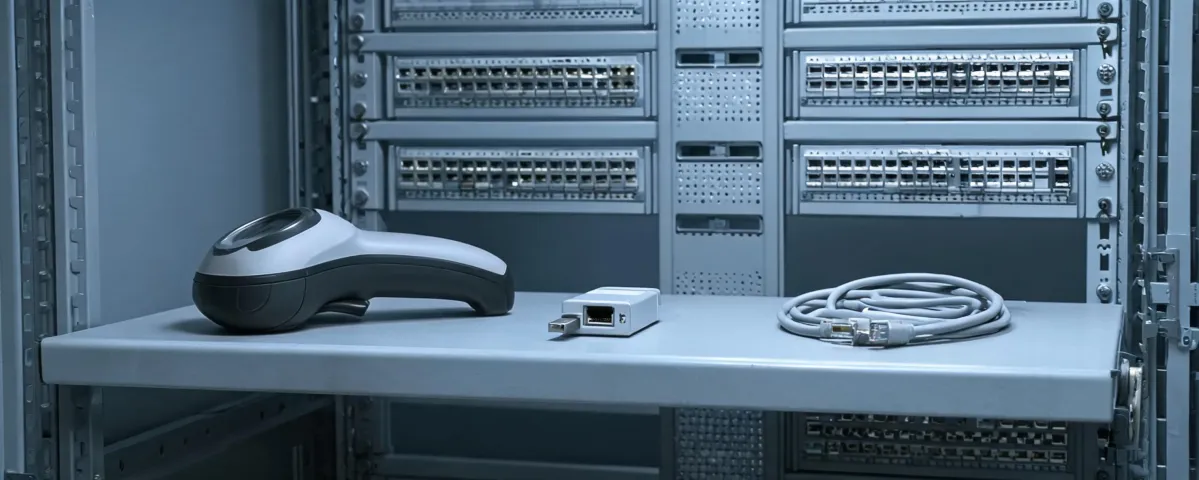
Jobs where 100 Mbps is the requirement, not a leftover label
Android handhelds on a floor
Scanners and tablets often need a wired fallback when wireless is congested. Record the Android build, whether the USB port is OTG, and the ingress protection of the host if the adapter will leave the office. The adapter shell rating is a separate question.
100BASE-TX cameras and legacy switches
If the switch port is 100 Mbps, a gigabit dongle does not raise that port. Ask whether the camera expects Power over Ethernet. A bus-powered USB adapter is not a PoE injector. PoE standard and watt budget belong on the switch or injector line, not silently inside the dongle price.
Temporary benches and commissioning carts
A tech cart may need one RJ45 for a management port. Note cable length, latch cycles, and whether the cart PC is USB 2.0. Connector mating cycle limits, when the datasheet states them, explain why a refurbished plug may be a poor spare.
When this form is the wrong family
A 10 gigabit server slot, a fiber handoff, or a routed CPE is a different brief. Optical budget, wavelength, and receiver sensitivity matter for optics, not for a copper 100 Mbps dongle. Send those lines to the Requirement Checklist when the host is PCIe.
The port the adapter lands on
Write the link speed the site expects the adapter to hold, and whether a 100 Mbps fallback is intentional. Ask the supplier for the speed the dongle negotiates and for any error counters the host can read. Do not ask the dongle supplier to quote switching capacity unless the proposed item is a switch.
New versus refurbished for floor spares
New condition usually brings a clearer warranty path and an unused latch. Refurbished units can cover a legacy chipset that a current catalog dropped, but the buyer should demand condition, remaining warranty, and the exact model mark. Mixing both in one column hides a different risk. This site has no lot photos and no condition grading of its own.
Documents, stages, and site constraints
Ask for the current datasheet, the driver list, and any FCC or NRTL file the supplier chooses to claim, each tied to the model. Delivery stages worth naming: document review, incoming mark check, and a link test on the real host. Site constraints include USB current, cable route length, and whether the jack sits in a dusty aisle. Impedance and return loss are cabling questions; cite them when the patch cord is in scope, and ask for the test the cord supplier will show. The TIA cabling overview is a question source, not a test report for your reel.
Procurement scenario: a camera row that must stay at 100 Mbps
Background: forty Android panels in a warehouse each need a wired path to a 100BASE-TX switch, destination Illinois, timing tied to a weekend cutover. Process: the note sets 100 Mbps as mandatory, forbids a silent gigabit substitution, asks for bus current, and lists PoE as not required on the adapter. Result: factories quote the copper dongle on one basis. The cutover date stays a buyer constraint. This desk does not turn that date into a ship commitment.
Related inquiry names are on the configuration list. Submit the written job from the contact page.